
Introduction
Social media burnout is real. Creators spend countless hours chasing likes, optimizing for algorithms, and watching follower counts obsessively. What if there was a platform that said: forget the numbers your content should matter because it’s good, not because it’s viral?
That’s the pitch behind Neptune App, a fresh short-form video platform taking aim at TikTok’s dominance. Built by CEO Ashley Darling, a former talent director who worked with independent creators, Neptune represents something different in the crowded social media landscape. It’s not just another app trying to copy TikTok’s formula. Instead, it’s designed to fix what many creators find frustrating: the endless pressure to perform.Neptune app
But is Neptune actually the TikTok replacement everyone’s looking for? Let’s dig into what this app actually offers.
What Is Neptune App?
Neptune is a short-form video platform created to compete with TikTok, Instagram Reels, and YouTube Shorts. Launched in April 2025, the app prioritizes creativity, genuine connections, and creator control over traditional social media metrics.
The key difference? Neptune was built specifically with creators in mind not corporations, not advertisers, not engagement algorithms designed to keep you scrolling. As CMO Timur Tugberk puts it: “We put the power back in the hands of [the creators] who actually built the internet. Not the corporations, not the algorithms.”
This isn’t just marketing speak. The app’s entire architecture reflects this philosophy. From ghost metrics that hide your follower count to a customizable algorithm you can actually control, Neptune challenges the traditional social media model.
Think of it this way: TikTok is like a massive shopping mall where everything is designed to make you buy more. Neptune app is more like a creative community center where people show up to share their work and connect with others who appreciate it.
Who Created Neptune?
Neptune was founded by Ashley Darling, a multi-talented entrepreneur with a background in talent management. Before launching Neptune, Darling worked as a talent director at OPTYX agency, where she represented independent and “underestimated” influencers creators who struggled to gain traction on mainstream platforms.
This experience shaped her vision. Working directly with creators and hearing their complaints repeatedly, she identified a clear problem: social media platforms had lost sight of what made them fun in the first place. Everyone was too focused on numbers.
“I spent years working with independent creators,” Darling explained. “I kept hearing the same thing: ‘I miss when social media was fun. When it was about creativity, not competition.’ So instead of waiting for a platform to listen, I built one.”
Neptune’s team includes other industry professionals focused on community management, platform development, and creator support. The app is venture-backed and headquartered in the United States.
Key Features That Make Neptune Different
1. Ghost Metrics: Hide Your Numbers
Here’s the most talked-about Neptune feature: ghost metrics the ability to completely hide your follower count and likes. But here’s the catch: it’s optional.
You can choose to hide your metrics, which helps reduce the pressure of competing for numbers. Alternatively, you can keep them visible if you want to showcase your reach. The power is yours.
Why does this matter? Research suggests that visible metrics create psychological pressure on creators. Hiding likes has been shown to reduce anxiety and improve mental health on platforms like Instagram. Neptune takes this a step further by making it completely optional.
Importantly, hiding your metrics doesn’t affect how the algorithm shows your content. Your videos still reach people just based on content quality, not your follower status.
2. Customizable Algorithm (Your Feed, Your Rules)
Neptune’s algorithm is fundamentally different from TikTok’s black-box approach. Instead of letting an AI decide what you see, Neptune gives you direct control through algorithm sliders.
You can adjust several settings:
Discover Slider: Control how many videos you see from new creators or topics. Set it high for maximum variety; set it low to stick with familiar creators.
Following Slider: Decide what percentage of your feed shows content from accounts you already follow. Want only your friends? Set it to 100%. Want pure discovery? Set it to 0%.
Hashtag Slider: Filter content based on specific hashtags. Neptune suggests hashtags with post counts, updated daily.
AI Filter: One of Neptune’s most useful features for creators concerned about authenticity enable this to hide AI-generated content from your feed entirely.
You can also lock specific sliders so they stay fixed while others adjust. It’s granular control that actual humans wanted but never had before.
3. Ad-Free Experience
Unlike TikTok, which shows ads mixed into your feed, Neptune launched without ads. This is huge for user experience. There’s no interruption, no jarring transitions to sponsored content.
How does Neptune make money without ads? Through creator monetization tools: tips, subscriptions, and livestreams. This creates alignment between the platform and creators Neptune succeeds when creators succeed.
4. Top 6: Build Your Own Crew
Neptune lets you highlight up to six favorite creators on your profile through the “Top 6” feature. This is reminiscent of MySpace, where users could customize which friends appeared on their profiles.
It’s a simple feature, but it encourages community and allows you to give shout-outs to creators who inspire you or collaborate with you.
5. Hop Back: Never Lose Your Place
Ever been scrolling through videos, step away, and come back only to have the app refresh and lose your place? Neptune’s “Hop Back” feature prevents this. When you return to the app, it remembers exactly where you left off on any video.
It’s a quality-of-life improvement that shows Neptune designers actually use the app they built.
How Neptune’s Algorithm Works (The Technical Side)
Neptune’s algorithm is designed specifically with micro-influencers in mind creators who struggle to gain traction on mainstream platforms where engagement metrics dominate.
Traditional algorithms work like this: A video goes viral because it gets lots of engagement (likes, comments, shares). The algorithm then pushes it to more people because it’s already popular. This creates a feedback loop where only the most viral content wins.
Neptune’s approach is different. The algorithm considers:
- Content quality (not just engagement metrics)
- User interests (based on your customizations)
- Creator history (whether they consistently make good content, not just lucky viral moments)
- Community engagement (thoughtful comments, not just likes)
This means a video from a smaller creator with a dedicated audience has a genuine chance of being discovered, even if it doesn’t instantly hit thousands of likes.
Neptune vs. TikTok: The Real Differences
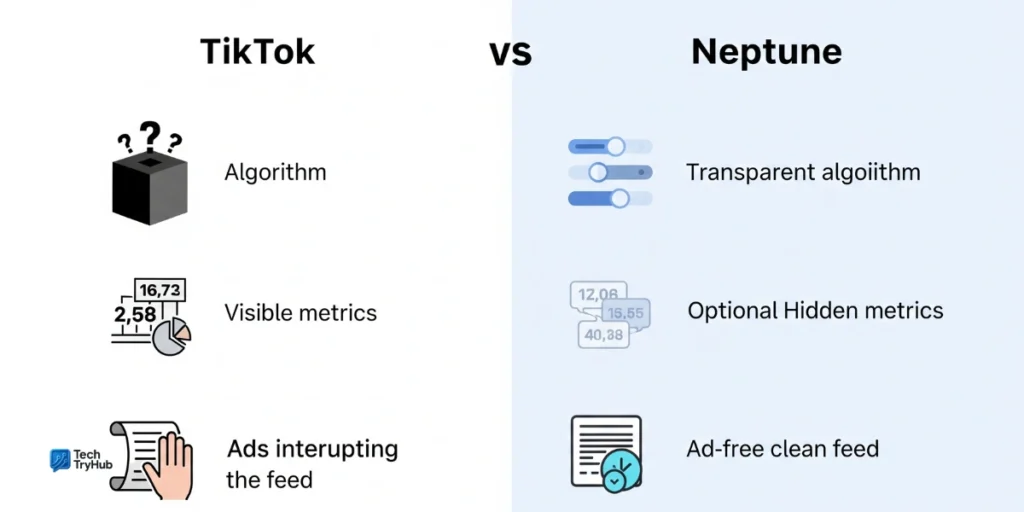
TikTok is a discovery machine. It shows you content from creators you don’t follow, optimized for maximum engagement. The algorithm is powerful but opaque. You have almost no control over what appears in your feed.
Neptune is a creator-controlled experience. It shows you what you want to see, using tools you understand and control. The algorithm is transparent and customizable.
On metrics:
- TikTok: Likes and follower counts are prominently displayed, creating pressure and competition.
- Neptune: You can hide everything if you want, focusing on creativity over vanity metrics.
With monetization:
- TikTok: Creators earn through the Creator Fund (which pays very little), brand deals, or driving traffic elsewhere.
- Neptune: Tips, subscriptions, and livestreams are built-in from the start.
On ads:
- TikTok: Ads are integrated into the feed.
- Neptune: No ads, period.
On creator representation:
- TikTok: Owned by ByteDance (Chinese company), corporate structure.
- Neptune: Female-founded, creator-first company, venture-backed but independent.
Neither platform is objectively “better” it depends on your goals. TikTok’s algorithm is exceptional for discovery and viral potential. Neptune is better for sustainable, audience-focused content creation.
How to Sign Up and Get Started
Getting on Neptune is straightforward, but availability varies by location.
Step-by-Step Setup:
- Download the app (iOS available; Android coming later).
- Tap “Create Account” on the login screen.
- Enter your email (lowercase letters only).
- Enter your date of birth.
- Choose a username (handle).
- Set a password (enter twice for confirmation).
- Confirm via email (enter the 6-digit code Neptune sends).
- Complete your profile (add a bio, profile picture, etc.).
Minimum Requirements:
- Must be at least 17 years old.
- Valid email address.
- iPhone or Android device.
Available on Multiple Devices:
Neptune currently offers one profile per account on mobile. However, you can manage up to three profiles (handles) on Neptune if you have verified email addresses, which is useful if you want separate accounts for different content types.
Key Takeaways: What You Need to Know
Neptune is a creator-first platform designed as a TikTok alternative with no ads and more creator control.
Ghost metrics let you hide follower counts and likes, reducing social media pressure while keeping your reach intact.
The customizable algorithm gives you direct control over what appears in your feed no black-box mystery.
Monetization is built-in (tips, subscriptions, livestreams) and designed to actually compensate creators fairly.
Best suited for independent creators, micro-influencers, and anyone tired of traditional social media pressure.
Is Neptune Actually Worth Trying?
Neptune makes sense if you’re:
- A creator tired of chasing vanity metrics.
- Someone who wants control over your feed and algorithm.
- An independent artist, musician, or creative looking for community.
- A user concerned about AI-generated content dominating your feed.
- Someone exploring alternatives to TikTok for any reason.
Neptune is less ideal if you’re:
- Primarily interested in viral growth and maximum reach.
- Dependent on TikTok’s algorithm for discoverability.
- Looking for a platform with millions of users already (Neptune is still growing).
The reality: Neptune is a genuine alternative, not a perfect TikTok replacement. It offers different values creator control, community focus, and fairness rather than trying to copy TikTok’s engagement-driven approach.
If you’ve felt burned out by traditional social media or want a platform that respects your creative process over your metrics, Neptune deserves a real look.
Conclusion: Neptune app
Social media doesn’t have to be about chasing numbers. Neptune proves there’s another way one that puts creativity first and lets creators control their own experience.
Is it the final TikTok killer everyone’s waiting for? Maybe not. But it’s a genuinely different option in a landscape that desperately needs fresh thinking.
Your growth starts when you stop measuring it in likes and follower counts and Neptune makes that possible from day one. Give it a try.
Frequently Asked Questions About Neptune App
Q1: When can I download Neptune App?
Neptune launched on iOS in April 2025 and is available in the U.S. Android users can expect the app in approximately six months from the iOS launch.
Q2: Is Neptune truly ad-free?
Yes. Neptune currently has zero ads in the user feed. The company plans to generate revenue through creator monetization tools (tips, subscriptions, livestreams) rather than advertising, maintaining a cleaner user experience.
Q3: Can I really control what I see in my Neptune feed?
Completely. Neptune’s algorithm sliders let you adjust how much content you see from new creators, followed accounts, specific hashtags, and whether you want AI-generated content filtered out entirely. You maintain full control.
Q4: How does Neptune make money if there are no ads?
Neptune takes a revenue share from creator monetization features: tips from viewers, subscription content, and livestream support. This aligns the platform’s success with creator success.
Q5: What’s the difference between Neptune and TikTok’s algorithm?
TikTok’s algorithm is proprietary and focuses on maximum engagement. Neptune’s algorithm prioritizes content quality and user interests while remaining transparent. With Neptune, you can see exactly what settings control your feed.
Q6: Do I have to use ghost metrics, or can I show my follower count?
Ghost metrics are completely optional. You can choose to display your followers and likes if you prefer. The choice is yours—Neptune isn’t forcing anyone to hide metrics.
Q7: Is Neptune safe for younger users?
Neptune requires users to be at least 17 years old at launch, making it slightly older than TikTok (which targets users 13+). The platform emphasizes community moderation and applies content guidelines similar to other social apps.